How do we encourage effective circular paint models?
10 April 2026
Circular paint initiatives – such as Community RePaint – have begun to make a difference in terms of keeping unused paint out of landfill butthere is still more to be done to shift the painting and decorating industry from a linear model to one based on circular economy principles.
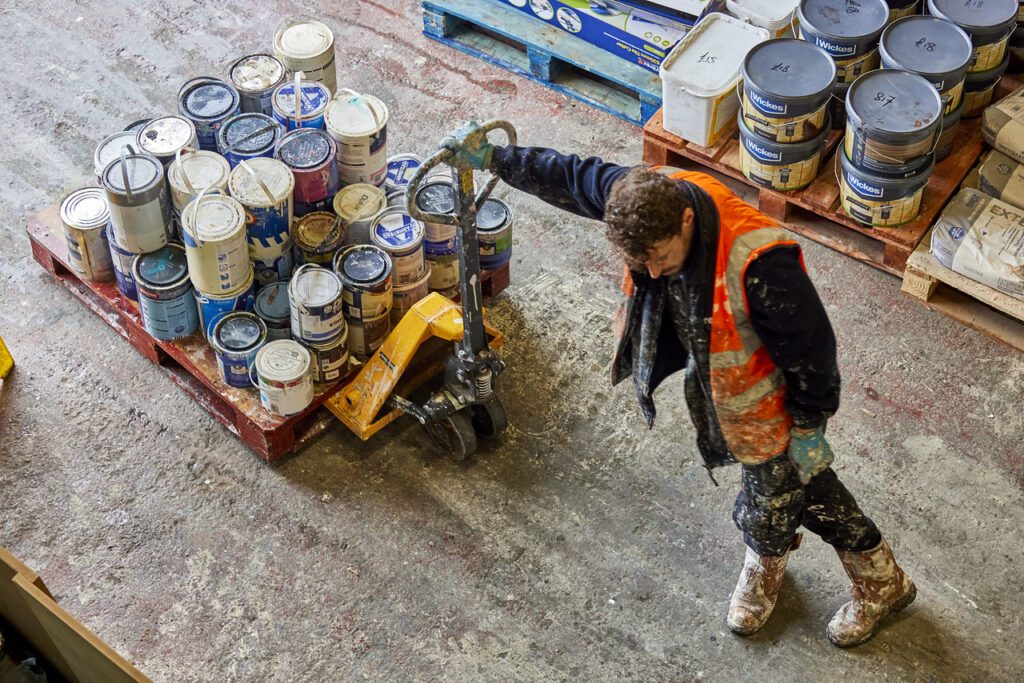
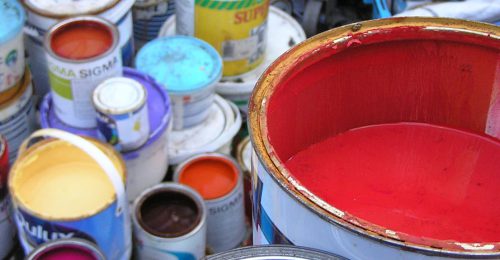
The paint and coatings sector faces significant sustainability challenges linked to waste, carbon emissions, chemical composition and end‑of‑life management. The vast majority of leftover paint generated in the UK is still sent to landfill or incinerated, creating avoidable environmental impacts and material loss. Despite decades of progress on formulation and efficiency, only around 2% of leftover decorative paint has historically been reused or remanufactured, creating a sizeable circularity gap.
This carries a substantial climate cost. The UK paint sector produces around 1.9 million tonnes of CO₂e annually, reflecting emissions from raw material extraction, manufacturing, transport and disposal. Virgin paint production is particularly carbon intensive, meaning that wasted paint represents both lost embodied carbon and unnecessary ongoing emissions.
The sustainability challenge of paint
Chemical complexity adds further challenges. Paints contain polymers, pigments and additives that complicate recycling and demand careful handling. Volatile organic compounds (VOCs), while reduced in many modern formulations, remain a concern for air quality and human health, and regulatory pressure continues to tighten across the UK and EU. Managing these substances safely at end of life remains costly for local authorities and industry alike – making the implementation of circular paint strategies more challenging to achieve.
Infrastructure and consumer behaviour remain key barriers to progress. Inconsistent local collection systems and low public awareness mean usable paint is routinely discarded. Programmes such as Community RePaint demonstrate that reuse and remanufacture are viable at scale, having redistributed over 5.4 million litres of paint to date.
Finding opportunities for circular paint models
Alongside reuse initiatives, wider industry collaboration is emerging as a critical lever for sustainability in the paint sector.
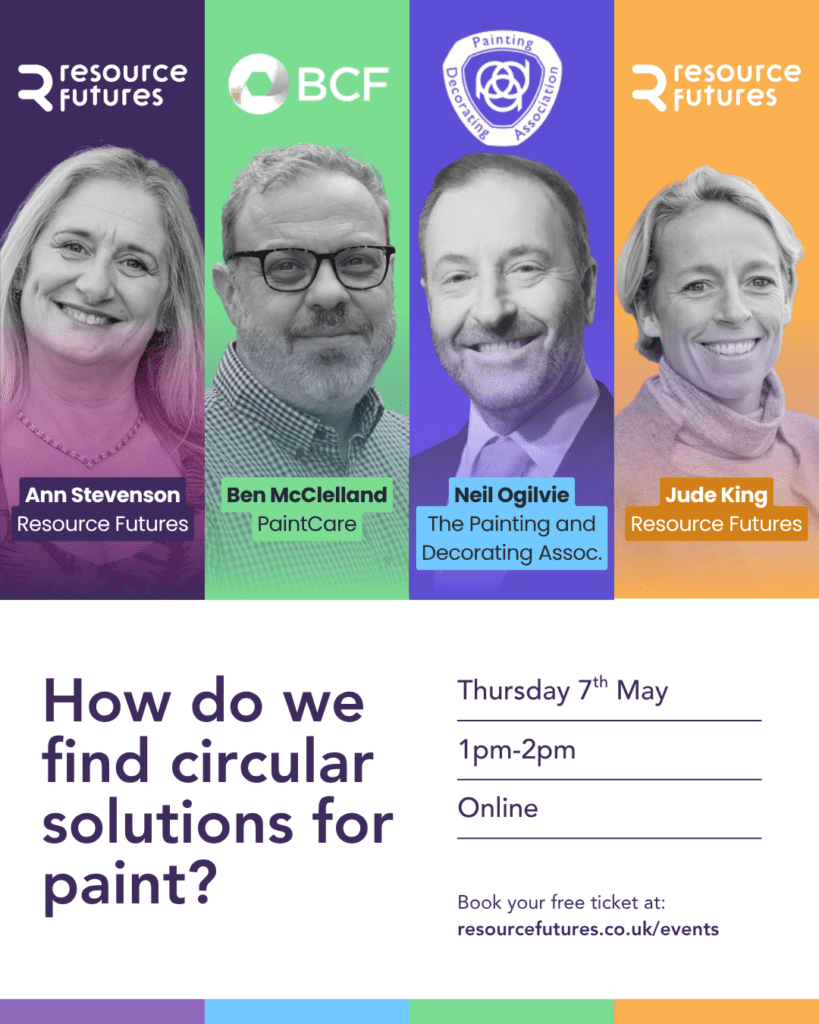
One example is the Painting and Decorating Association’s Paint Green scheme, in which members make a firm commitment to reducing waste. To achieve ‘Paint Green’ status, participants are required to sign up to a paint container recycling scheme and also actively seek opportunities to ensure that waste paint from their operations is reduced, reused or recycled rather than sent to landfill.
Also looking to spearhead a collaboration-led approach to build out circular paint models is PaintCare, a British Coatings Federation-led, industry‑funded initiative designed to create a national circular economy for leftover decorative paint. Developed with analytical support from Resource Futures experts, PaintCare aims to increase reuse, remanufacture and recycling rates from historic levels of around 2% to at least 75% by the early 2030s, through consistent take‑back systems and shared investment across manufacturers and retailers.
In 2026, PaintCare launched a regional pilot in the West Midlands, enabling consumers and tradespeople to return leftover paint and packaging at participating retail sites, addressing long‑standing access and convenience barriers that drive paint disposal.
Working together to create circular solutions for paint
Beyond take‑back schemes, collaboration is also accelerating innovation in remanufacturing, logistics and life‑cycle analysis, ensuring environmental impacts are reduced across the value chain rather than displaced elsewhere.
This can help when an particular waste hotspot is identified that is beyond the ability of a single organisation to solve. This was the case with Brewers Decorator Centres – our waste audit of the business’ operations identified that the problematic waste associated with tint waste was a key hotspot for them, resulting not only from in-store mis-tints as well as customer returns.
Additional research suggested that while some promising innovative solutions around tint waste existed, this might be best pursued through cross-business collaborative action rather than an individual organisation taking on the challenge (and the costs) alone.
Such shared, system‑level approaches – combining producer responsibility, local authority engagement and consumer behaviour change – are essential if the paint sector is to decarbonise at pace and move from fragmented pilot projects toward scalable, UK‑wide solutions.
Our paint circularity initiative Community RePaint has hit yet another milestone after its Wirral RePaint centre redistributed its one millionth litre of paint. Community RePaint Wirral – which is run by Recipro – receives paint from a number of Household Waste Recycling Centres (HWRCs) in the area as well as collecting donated leftover paint from … <p class="link-more"><a href="https://www.resourcefutures.co.uk/encourage-circular-paint-models/" class="more-link">Continue reading<span class="screen-reader-text"> "How do we encourage effective circular paint models?"</span></a></p>
7 May 2017
Community RePaint is delighted to announce that it has won ‘Best Community Recycling Initiative at the Awards for Excellence in Recycling & Waste Management. Organised by letsrecycle.com, The Awards for Excellence in Recycling & Waste Management recognises and rewards those striving for excellence across the waste, resource and recycling sector.
Sarah Hargreaves, Communications Consultant at Resource Futures, says changes to services are often greeted with firm public resistance particularly where there is a lack of effective engagement to support and explain the changes. Here, she asks what’s the best way to encourage behaviour change across diverse communities?