
Do we need to expand e-waste regulation in the UK?
28 September 2026
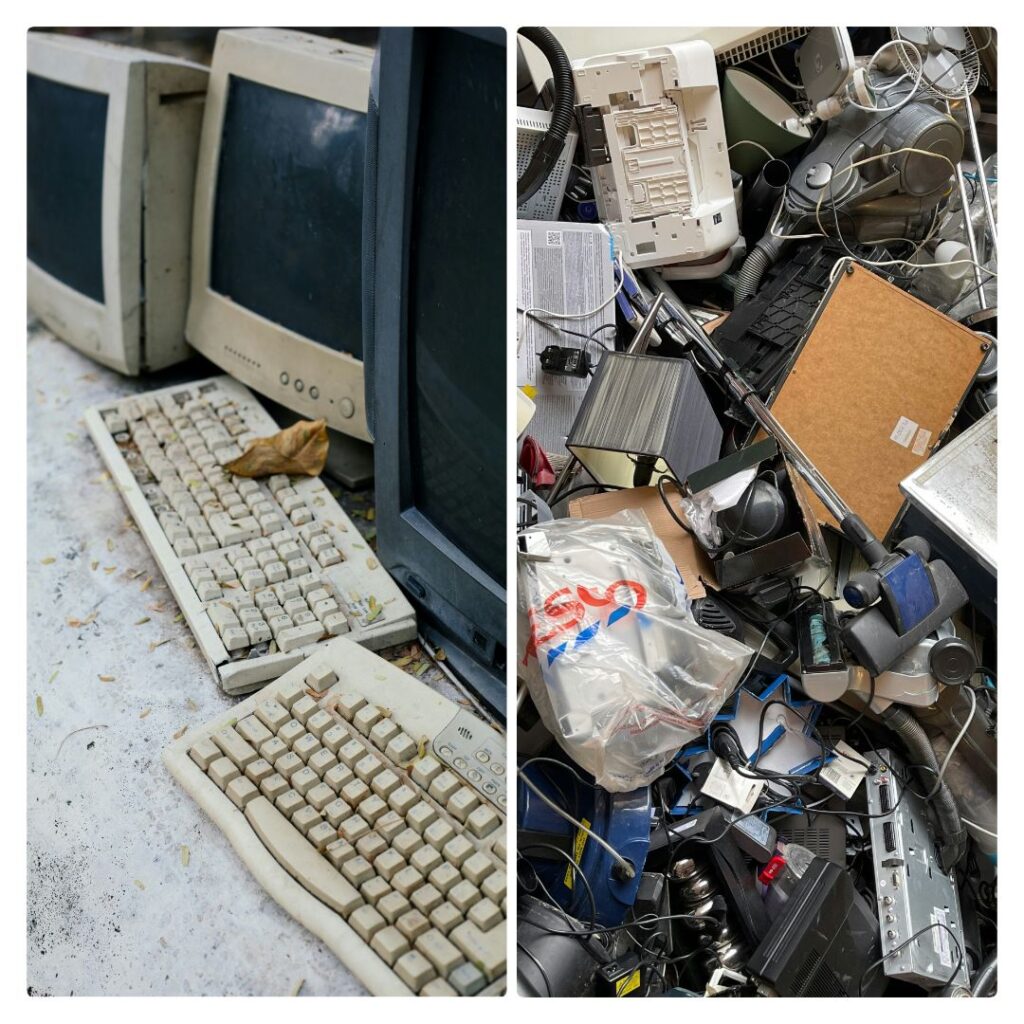
Our consumption rate of electronics in the UK is staggering. Each year 2.2 million metric tonnes of electrical items are added to the UK market;[i] meanwhile, in 2022 we collectively created 1.5 million tonnes of e-waste, of which only 30% was formally collected and recycled.[ii]
Each of us creates on average 24.5kg of e-waste per year,[iii] with the UK hot on Norway’s heels in the stakes of which country is the worst culprit for e-waste generation (on a per capita basis).
The situation is not all doom and gloom: there has been significant progress made in terms of improving the availability (and take-up) of e-waste recycling across the UK. As well as increasing kerbside provision for WEEE (waste electrical and electronic equipment), there are now more than 30,000 donation points for electrical items around the country, up from a mere 3,000 in 2020.
Fast tech is a rapidly growing problem
The emergence of ‘fast tech’ – small, cheap electrical items with short lifetimes, like vapes or earpods – has caused an additional, and unexpected, rush of e-waste that can cause catastrophic damage if not handled properly after use. Steps have been taken to tackle the worst culprits – such as single use vapes, which were banned on 1st June 2025;[iv] however, a colossal amount of environmental damage can happen in the period between market introduction and the arrival of legislation to tackle problem items (in 2023, Material Focus estimated that 5 million vapes were being disposed of each week; this rose to 8 million per week by December 2024).[v]
Finding appropriate solutions for e-waste – particularly those with volatile elements such as batteries – is environmentally critical. Not only is there the risk of battery fires from e-waste incorrectly sent to landfill or incineration; improperly recycled e-waste has been known to release up to a thousand different chemical substances into the environment – many of them toxic.[vi]
Looking beyond simply recycling
Research from The Restart Project shows that almost half of the electricals sent for recycling could be reused.[vii] However, progress on finding value higher up the materials hierarchy (i.e. repair, reuse and redistribution) has been slow and beset by consumer challenges – the first of which is a reluctance to throw away existing tech.
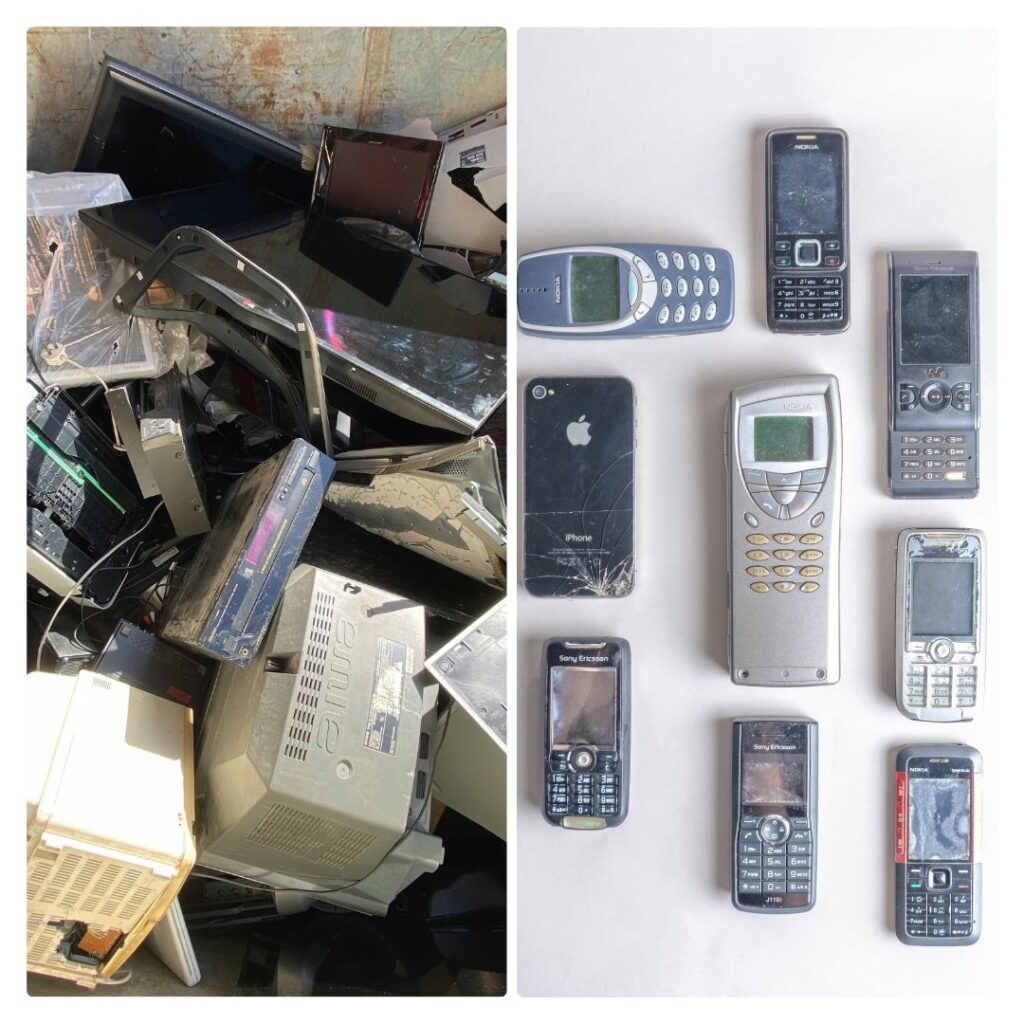
It is estimated that there are 880 million unwanted and unused devices sat in UK homes – that works out at roughly 30 per household.[viii]
Addressing the cost of repair
For some devices – including mobile phones and laptops – the high cost of repair can be a prohibitive barrier to sustainable behaviour. Another key factor in low repair rates for electricals is that few people feel confident, or have the knowledge, needed to make repairs to electrical items themselves or access repair services for their technology.
The Fast Phones report[ix] – published by WWF-UK and written by experts from Resource Futures – sets out the key steps that need to be taken to improve access to mobile phone repair services: these include the introduction of 0% VAT on repair services and parts (to help reduce prices and improve accessibility), ensuring repairs by non-accredited repairers are accepted under manufacturing warranties, mandating the provision of spare parts at reasonable prices, and providers offering clear guidance on how to access repair services.
Shifting public opinion on ‘second-hand’ electronics
While most people will happily consider purchasing a used car, there is far less enthusiasm among the public to embrace second-hand electrical items, with the Fast Phones study showing that only 26% of people have bought a second-hand phone (prevailingly for financial reasons rather than environmental concerns).
In the absence of consistent manufacturer support for repair of many items consumers are writing off electronics as ‘waste’ too early in the product life cycle.
One solution to this is to tap into community knowledge – increasing both the visibility and accessibility of these efforts – to drive up repair rates of used electronic items.
The Community Repair Network indicates there are at least 877 community repair cafes and other similar initiatives all over the United Kingdom, reaching areas as far-flung as Cornwall, Jersey, Anglesey and the Shetland Islands[x] (this includes dozens of groups supported by our Community Action Groups (CAG) networks in Somerset and Devon).
While not all of these are set up to handle electrical items, there is a wealth of repair knowledge out there that can be accessed and used to educate others and empower the public to look to repair their items before they discard them.
Preventing restrictive manufacturer practices
While hardware is often the focus of discussions around e-waste, a lack of support for legacy software is a prominent contributor to device obsolescence.
Currently there is nothing stopping a manufacturer from withdrawing support for a particular software even if, as is the case with Microsoft’s decision to stop supporting Windows 10, this decision will affect up to 400 million devices (and could result in about 14.4 million obsolete PCs in the UK alone)[xi]; causing a mountain of avoidable e-waste as the result of a single manufacturer’s actions.
The UK Reuse and Repair Declaration[xii] – spearheaded by The Restart Project and supported by more than 393 community groups, 105 businesses and 160 MPs – sets out a demand for ‘right to repair regulations to cover all consumer products, strengthen design standards and remove barriers to repair for everyone’, along with other actions to prioritise reuse and repair over recycling such as making it easier for customers to choose more durable and repairable products.
There is a potential competitive advantage for manufacturers embracing the repair economy: high street retailers are missing out on up to £850 million in revenue by not selling refurbished and repaired electronics.[xiii]
Adopting eco-design
While increasing access to repair is a vital step, this has to be aligned with a substantial shift in how we approach the design and manufacture of electronic devices. Currently, 40% of the environmental impact of digital technology’s greenhouse gas emissions is tied to the manufacturing stage,[xiv] making this an area where potentially huge carbon savings can be found.
One regulatory lever could be to require manufacturers to publish eco-design plans for products (with updates every five years); if paired with a requirement for proof of recycling at end destinations (in line with packaging EPR requirements), this would provide a powerful push and pull to encourage the design of longer-lasting, more easily repaired devices.
Privacy and data concerns
One behaviour that needs to be addressed is attitudes around devices that are broken or no longer needed. 880 million items are being kept in drawers around the UK – an average of 30 per household.[xv]
One of the fears that keeps people hoarding devices rather than repairing, returning or donating their used technology is privacy – notably, concerns that their personal data will be at risk if they hand over their device to a third party.
This is an issue that we work on closely with the technology partners of the Fixy project (including DonateIT in Somerset and Wastesavers in South Wales) ensuring that we have a robust pathway for donated devices so that any data is securely erased and the devices checked carefully by specialists before they are passed on to those who need them for digital access.
There is a three-part pressure on handlers of technology for the second user market: firstly, to ensure they don’t fall foul of the Data Protection Act and GDPR rules around residual personal data held on devices; secondly, to keep accurate records on what has been done to the device to provide assurance to both the provider and the recipient of the technology; finally, to provide clear guidance on what consumers need to do before handing over their devices (for example, unlinking iCloud on Apple devices, which cannot be done at a later date).
Powering up policy levers
To date, 81 countries have adopted some sort of e-waste policy, legislation or regulation; meanwhile, 67 countries have adopted legal provisions on EPR for e-waste.[xvi] The UK equivalent of this – the Waste Electrical and Electronic Equipment Regulations – outlines producer and distributor responsibilities around e-waste.
These regulations dictate that producers placing more than five tonnes of electrical and electronic equipment (EEE) on the market must join a producer compliance scheme (PCS) that pays for the collection, treatment, recovery and environmentally sound disposal of household e-waste collected in the UK; it also sets out responsibilities for distributors to both offer free takeback on waste electricals and electronic items and make information on this available and accessible to consumers.
However, beyond this the legislation provides few levers to influence manufacturers who design for short-term life cycles and block repair accessibility.
More robust legislation around the design, durability and repairability of EEE would be a welcome step to holding the consumer technology supply chain fully accountable for the e-waste it generates; this could include legislating against planned obsolescence, and channelling industry funds raised via the upcoming WEEE Extended Producer Responsibility reforms into the repair sector.
Other potential options for an expanded policy landscape include requiring proof of recycling at end destinations (in line with packaging EPR requirements) and mandating businesses to donate unsold items (and thereby disincentivise overproduction).
There is a long way to go – both nationally and globally – to get a handle on the e-waste problem in the UK. However, the solutions are out there – as with so many sustainability problems, this one can be solved by a combination of collaboration, creative approaches, and educating the wider public on available options – as well as holding producers and distributors responsible for the waste they produce.
[i] Material Focus
[ii] The Global E-waste Monitor (2024): https://www.itu.int/en/ITU-D/Environment/Documents/Publications/2025/d-gen-e_waste.01-2024-pdf-e.pdf
[iii] The Global E-waste Monitor (2024): https://www.itu.int/en/ITU-D/Environment/Documents/Publications/2025/d-gen-e_waste.01-2024-pdf-e.pdf
[iv] UK Government – single-use vapes ban guidance: https://www.gov.uk/guidance/single-use-vapes-ban
[v] Material Focus: https://www.materialfocus.org.uk/?press-releases=disposable-single-use-vapes-thrown-away-have-quadrupled-to-5-million-per-week
[vi] World Health Organisation: https://www.who.int/news-room/fact-sheets/detail/electronic-waste-%28e-waste%29
[vii] The Restart Project: https://therestartproject.org/news/recycling-reusable-products/
[viii] Material Focus
[ix] WWF-UK Fast Phones Report: https://www.resourcefutures.co.uk/report-fast-phones-practical-solutions-for-tackling-mobile-e-waste/
[x] Community Repair Network https://communityrepairnetwork.org.uk/find/
[xi] Business Waste: https://www.businesswaste.co.uk/news/windows-10-eos-e-waste/
[xii] The Restart Project: https://therestartproject.org/campaigns/repair-reuse-declaration/
[xiii] WWF-UK Fast Phones Report: https://www.resourcefutures.co.uk/report-fast-phones-practical-solutions-for-tackling-mobile-e-waste/
[xiv] The Shift Project: https://theshiftproject.org/app/uploads/2025/02/Environmental-impacts-of-digital-technology-5-year-trends-and-5G-governance_March2021.pdf
[xv] Material Focus
[xvi] The Global E-waste Monitor (2024): https://www.itu.int/en/ITU-D/Environment/Documents/Publications/2025/d-gen-e_waste.01-2024-pdf-e.pdf