Preparing for ETS: five questions to ask your EfW operator
30 June 2026
The UK Emissions Trading Scheme (ETS) has long sat in the background of local authority waste conversations. That is changing.
Government plans to extend ETS to Energy from Waste (EfW) facilities puts (for the first time) a direct price on the fossil carbon portion of residual waste. While the policy detail is still evolving, the direction of travel is clear enough to warrant action. For local authorities, the challenge is not just understanding what ETS might mean in theory, but how it could play out in contracts, budgets and service delivery in practice.
What does ETS mean for local authorities?
At its core, ETS places a cost on greenhouse gas emissions by requiring industrial operators to account for every tonne of carbon dioxide equivalent gas they produce. If EfW is brought into scope as planned in 2028 following the initial Monitoring, Reporting, and Verification (MRV) phase, EfW operators would need to account for the fossil carbon content of the waste they burn.
For local authorities, this introduces a potentially significant but currently uncertain financial risk. Depending on how the ETS scheme is structured and what kind of contract arrangements are in place between EfW operators and local authorities, it is very likely ETS will bring additional costs passed through to councils. This will have a knock-on effect on EfW gate fees and long-term affordability of residual waste treatment. That uncertainty comes at a time when waste services are already under pressure, from tightening budgets to rising service expectations.
Crucially, while EfW operators would be the regulated entities, local authorities remain exposed. And while there is still uncertainty around the local authority cost pass-through rate set by government, it is clear that ETS is no longer just ‘an operator issue’ or ‘a council issue’; it is both.
Where are local authorities now?
At Resource Futures, we have been engaging with local authorities across the UK to understand how they are approaching their ETS exposure. Everyone is at a different stage.
Some are actively modelling scenarios and interrogating contracts. Others are aware of the risk but unsure where to start. A common thread runs through almost every conversation: how can local authorities engage with their EfW providers in a way that is informed, constructive and robust?
Many councils are being presented with ETS exposure scenarios by operators. The challenge is knowing how to verify and validate those assumptions. What data underpins them? What is being counted, and what is not? How sensitive are the figures to changes in waste composition or policy design?
These are not easy questions, especially when the policy itself is not finalised.
Planning amid uncertainty
There is no escaping the uncertainty surrounding how, and even if, ETS will play out in its currently proposed form for EfW. Final timelines, transitional arrangements and interactions with other government commitments, namely UK ETS alignment with the EU ETS and with other policies including Extended Producer Responsibility (EPR), remain subject to change and could bring delays.
External factors add another layer of complexity. Energy markets, inflationary pressures and wider economic volatility all influence the operating context for EfW. But uncertainty is not a reason to wait.
Local authorities cannot afford to be passive observers. They need to act and plan now. Contracts span decades. Infrastructure decisions made now will shape costs and carbon impacts well into the future. Future proofing services means engaging with ETS risk before it materialises.
Why waste composition data really matters
One area where local authorities can take control is data.
Drawing on our extensive experience in waste composition analysis, Resource Futures supports local authorities in unlocking the value of their data. This helps inform strategic waste infrastructure planning and operational decisions that deliver cost-effective, compliant and high performing waste and recycling services.
Under ETS, it is the fossil carbon fraction of waste that matters – mainly plastics, which in our experience might account for around a quarter of the household residual waste stream. That fraction is not fixed. It varies by local authority, by collection system and performance, and changes over time. This creates a clear opportunity for local authorities: reducing plastics in the residual stream through improved capture and behaviour change can directly lower ETS costs.
High-quality, granular waste composition data allows local authorities to understand, in meticulous detail, what is in their residual waste stream. Every kilogram of fossil-based material has a cost implication under ETS. Conversely, every reduction achieved through better sorting, capture or prevention, reduces future exposure.
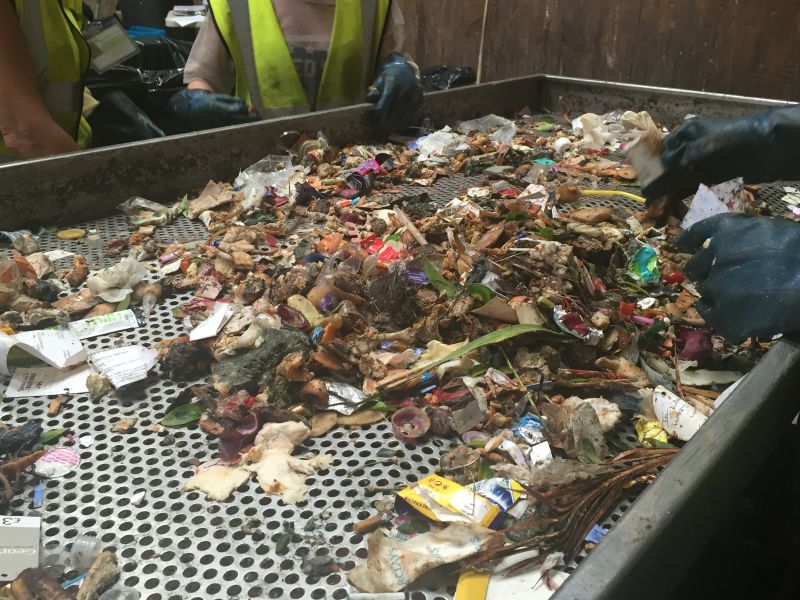
In this context, investment in behaviour change and service optimisation is no longer just about meeting recycling targets, but about reducing long-term financial exposure and improving control over future waste disposal costs.
This level of insight changes the conversation with EfW operators. Instead of accepting generic assumptions, local authorities can ground discussions in evidence specific to their waste.
Five questions to ask your EfW operator
So, what should local authorities be asking? While every contract and facility is different, there are some common themes worth exploring:
1. How is the fossil carbon content of waste being calculated? Find out what data and waste sources and assumptions are being used, and how frequently are they updated. Does this only include the waste your local authority produces, or does it include waste from other local authorities and commercial sources too?
2. How sensitive are ETS cost projections to changes in waste composition? Find out what happens if recycling improves, or if certain materials are removed from the residual stream.
3. How will ETS costs be treated contractually? Find out if there are caps, sharing mechanisms or review points, and how transparent will cost pass through be.
4. What role can the local authority play in reducing exposure? Find out what interventions – operational, behavioural or evaluative (e.g. waste composition analyses) could materially reduce fossil carbon input.
5. How are policy uncertainties being managed? Find out what assumptions are being made about timelines, prices and interactions with other policies.
This is not about challenging operators for the sake of it. This is about building a shared understanding of risk.
Starting the conversation
ETS may still feel abstract, but its implications are tangible. Local authorities that engage early, ask the right questions and make the most of their data, will be far better placed to navigate what comes next.
There is no single starting point. Wherever you are on your ETS exposure journey, we would love to hear from you. Get in touch to share your experience or explore how your waste data could support more informed decisions.
Support guide for local authorities
Download this useful guide, covering:
- How EfW fits into the policy landscape
- Cost scenarios of local authority exposure to ETS costs
- Indicative costs
- Taking action on EfW and next steps
Get in touch with our experts to find out more
Waste strategy and development planning: Doug Simpson
Stakeholder engagement and communications: Sarah Hargreaves
Recycling infrastructure data and insights: Doug or Sarah