
Retaining value: what happens after we donate?
15 July 2026
Our Glasgow-based Junior Consultant, Steven Hedley, explores why improving what we give – and how it is reused – is key to building a stronger circular economy.
At Resource Futures, much of our work focuses on the value of reuse. Keeping products and materials in use for as long as possible is central to building a more sustainable and resilient future. This principle sits at the heart of the circular economy.
One of the most widespread reuse methods is donation. This includes dropping off clothing at textile collection banks or at local charity shops. It also includes gifting electrical items via tech amnesties, such as those run by our very own Fixy van, or via numerous drop-off points across the country facilitated by our partner Donate IT.
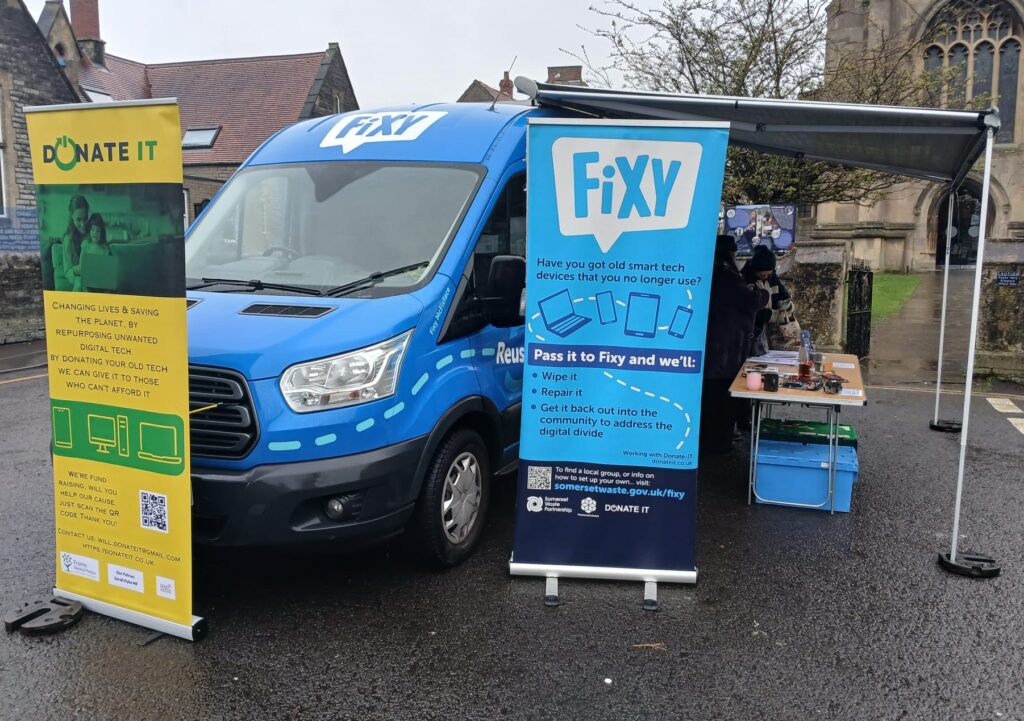
But what happens after these items are donated? How much is genuinely reused, and what challenges stand in the way of maximising their value?
Where do our donated textiles end up?
On a recent visit to a textiles recycling facility in Scotland, I saw first-hand what happens after clothing is placed in a textile collection bank. It was an impressive operation. The site processes over 100 tonnes of material each week. Items are sorted, graded, and prepared for resale, with the majority destined for overseas second-hand markets.
For some, the idea of clothing being shipped abroad raises concerns. Media stories are often quick to highlight cases where discarded textiles end up on beaches or in landfills of receiving countries. But it is worth understanding the regulatory and market context behind this.
Exporting waste from Scotland is illegal and strictly enforced by the Scottish Environment Protection Agency (SEPA). Materials exported must meet quality standards suitable for reuse. In this context, they are not classified as waste.
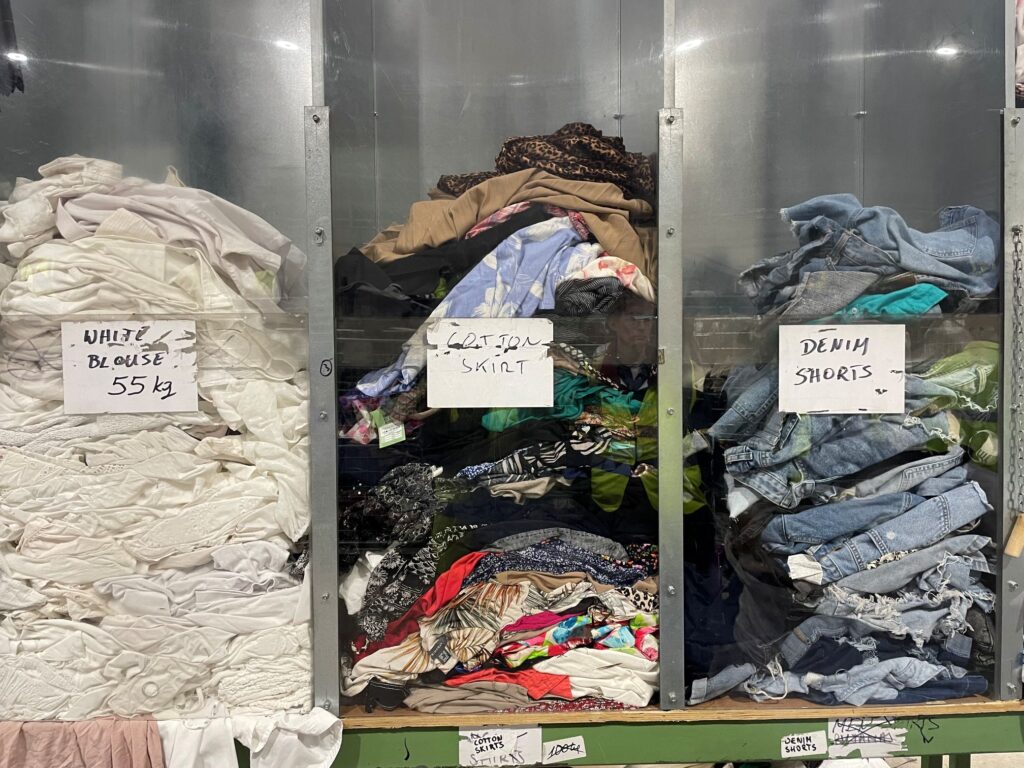
Global second-hand clothing markets are also a well-established and legitimate trade. They provide affordable clothing to millions of people and support livelihoods in many countries. Market forces also limit low-quality exports, as those selling second-hand clothing must find willing customers. Companies trying to dump unsellable textiles onto international marketplaces will quickly become unpopular with bulk buyers.
The fast fashion flood
The challenge facing these markets is not the trade itself, but the quality of what is entering it.
Fast fashion has led to a significant increase in low-cost, short-lived garments that often do not hold their value. As a result, donation streams are becoming saturated with low-quality clothing; this has two key impacts:
- It reduces the proportion of items that can be reused and resold.
- It drives down prices across second-hand markets, affecting their economic viability.
Low-quality donations are not just an issue for textiles. Similar challenges are emerging in other reuse streams, including electricals, where product lifespan and repairability also affect outcomes.
A growing repair movement
At the same time, there are encouraging signs of change. Repair and reuse are gaining momentum at a community level. Our Community Action Groups (CAG) network in Somerset has found that 58% of people would use a repair service if they knew where to find one. There has also been great success with initiatives such as repair vouchers (vouchers that can be used against the cost of repair). ReLondon’s recent trial finding that 79% of participants said that they were likely to repair again and would recommend the scheme to others.
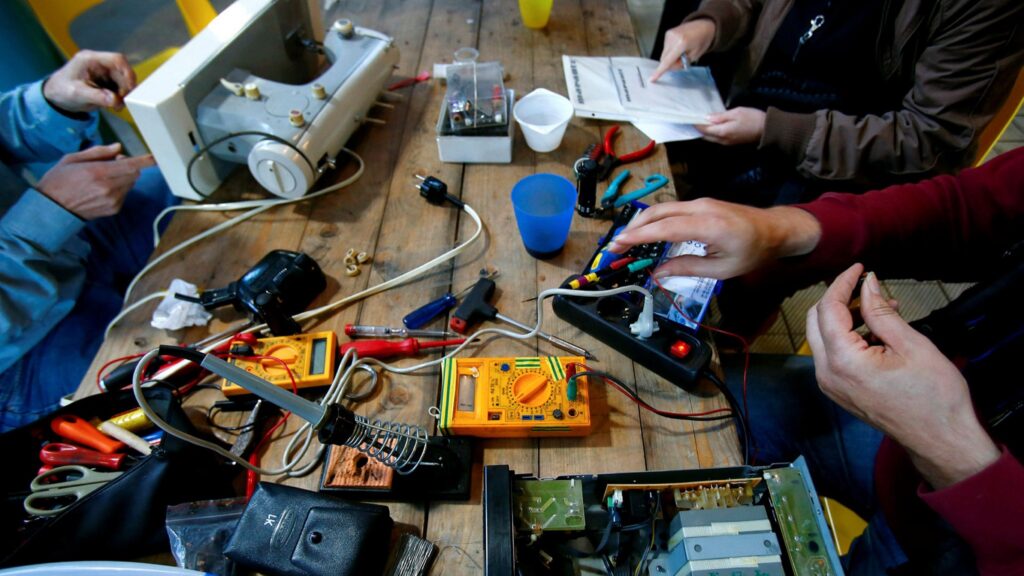
Repair cafés, clothes swaps, and local textile initiatives are creating opportunities to extend the life of products before they enter the donation system. This represents a different kind of reuse infrastructure, one that tackles waste further upstream.
There is also a growing recognition that circular approaches make economic as well as environmental sense. Strengthening reuse systems is not just about reducing waste; it is about building resilience and long-term value.
The carbon case for reuse
The environmental impact of reuse becomes particularly clear when looking at electrical items.
For donated laptops:
- Recycling saves around 0.61kg of CO2e per device
- Refurbishment and reuse save around 72.5kg of CO2e per device – nearly 120 times greater impact
These estimates take into account a displacement rate, e.g. how much a reused item replaces a new item. This is important to consider as it is unlikely that a reused item directly replaces a brand-new item. By adding in a displacement rate, we get a more accurate idea of the types of savings that are being made.
To estimate the average benefit across all donated laptops, we also need to consider how many are actually reused. Using an indicative reuse rate of around 20%: the average saving is approximately 15kg of CO2e per donated laptop.
This figure is highly sensitive to the reuse rate. Increasing the proportion of devices that reach refurbishment and redistribution in good condition, and without large delays, would significantly increase overall carbon savings.
Even at this conservative estimate, the impact is meaningful. Donate IT has processed around 300 laptops in 2026 alone. This equates to a total saving of approximately 4.5 tonnes of CO2e. In context, this is roughly equivalent to driving from Glasgow to London and back again around 25 times.
Moving forward
Reuse has enormous potential, but it depends on what flows into the system. Improving the quality of donations, supporting repair, and strengthening reuse markets will all be critical to unlocking that value.
The opportunity is clear. By keeping more products in use for longer, we can deliver environmental benefits, support communities, and build a more resilient circular economy.